


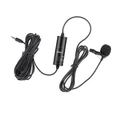


We are a professional manufacturer of high-end microphones and earphones, all products are independent research and development and production. Has its own mold design center, product development team, sales network all over the world. With the professional spirit of innovation and customer service, the company has developed from a small processing plant with more than 20 employees to a large manufacturing enterprise of large microphones and headphones audio products with more than 300 employees in just a few years.
Why Choose Us
Quality Assurance
Company to ensure product quality as the benchmark, customer service as the premise, cohesion and development of the team, improve service quality, pay attention to corporate reputation! Sincere service for new and old customers as always!
Advanced Production Technology
From the manufacturing of microphone raw materials into the factory to the finished products are all completed by the advanced one-stop production process, and through the strict quality testing of skilled technicians, to ensure that our products have beautiful appearance, superior performance, stable quality, and low price characteristics.
Company's Product
Wireless microphone, wired microphone, conference microphone (Gooseneck microphone), collar microphone, headphone, musical instrument microphone (drum set microphone), computer microphone, teaching microphone, broadcast recording microphone, interview microphone, live microphone, microphone accessories, headphone, in-ear headset, Bluetooth headset, TWS portable, etc.
Our Factory
We are a professional manufacturer of high-end microphones and earphones, all products are independent research and development and production. Has its own mold design center, product development team, sales network all over the world. With the professional spirit of innovation and customer service, the company has developed from a small processing plant with more than 20 employees to a large manufacturing enterprise of large microphones and headphones audio products with more than 300 employees in just a few years.

Toyota Car Navigation Microphone
This is a microphone used in car navigation to make phone calls, making the voice louder and clearer

It comes with a clip for easy installation, which can be clipped to the collar for use, or clipped to the visor for talking

Honda Car Navigation Microphone
Comes with double-sided tape to stick anywhere Use 3.5MM universal audio interface, plug in can be used

Our line uses a double-layer shielded line so that the audio signal does not interfere with the phone and the sound is clearer, which can achieve a downshower call. The line has long and short can be customized according to different needs

Our line uses a double-layer shielded line so that the audio signal does not interfere with the phone and the sound is clearer, which can achieve a downshower call. The line has long and short can be customized according to different needs

Audi Car Navigation Microphone
Our line uses a double-layer shielded line so that the audio signal does not interfere with the phone and the sound is clearer, which can achieve a downshower call. The line has long and short can be customized according to different needs

Comes with double-sided tape to stick anywhere Use 3.5MM universal audio interface, plug in can be used

Great Wall Motor Car Microphone
This is a microphone used in car navigation to make phone calls, making the voice louder and clearer

Comes with double-sided tape to stick anywhere Use 3.5MM universal audio interface, plug in can be used
The operation of the moving coil or dynamic microphone, like the dynamic loudspeaker, is fundamentally that of a conductor moving in a magnetic field, thus generating a voltage in the conductor. The diaphragm is made of thin duralumin which - in a high-grade unit - is pressed into a dome shape for stiffening to obtain a piston action over the audio frequency range. Improved frequency response is achieved by providing an "air passage" to afford outlet for the rear sound wave.The moving coil is made from thin aluminum ribbon cemented to the diaphragm, and moves in the air gap between the pole pieces. The permanent magnet is composed of cobalt alloy steel, which will remain magnetized for a long period of time.
- Dynamics can handle higher SPLs. Condensors and ribbons tend to overload more easily.
Dynamics tend to have a smoother, albeit less-detailed high frequency range than condensors.
Dynamics might have a more accurate low-frequency range, although there is a lot of variation within the class in this regard.
Dynamics are more durable than condensors or ribbons.
Dynamics do not require phantom power or other types of external powering (like batteries).
Construction of Moving Coil Microphone
Magnet: The magnet is a pot-style permanent magnet with a central and periphery pole component. In the space between the pole pieces, this kind of magnet produces a consistent magnetic field.
Diaphragm: The diaphragm is a lightweight, thin, circular sheet made of non-magnetic material. It has a little dome to add more rigidity. With the aid of springs, it is secured to the magnet's body. A diaphragm's motion is conformed to by the springs. The inductive effect is produced by the diaphragm and coil assembly's mass.
Coil: A cardboard cylinder that is fastened to the diaphragm is wound with the coil. The coil is made of a thin, single-layered enameled wire.
Protective Cover: The sensitive diaphragm and coil assembly are shielded from damage by a protective cover. The lower chamber is divided from the top chamber by a silk cloth partition. The lower chamber's little tube provides access to the free atmosphere.
Spring: The diaphragm's mass limits the high-frequency output, while the compliance of the springs causes the stiffness that limits the low-frequency output.
Moving Coil Microphone VS Condenser Microphone

The Difference Of Working Principle: The moving coil microphone uses the principle of electromagnetic induction. It carries the wire coil on the diaphragm, and then places it in the magnetic fields of the magnet. With the change of sound pressure, it continuously moves in the magnetic field to generate induced current, thus converting the sound signal into electrical signal. While the condenser microphone uses the charge and discharge principle of capacitor. The diaphragm of a condenser microphone is usually made of polyester film. The diaphragm is fixed on a capacitor composed of two metal plates. When the diaphragm receives sound waves, the capacitance will fluctuate and output current, which will produce sound after amplification.
Structural Differences: The moving coil microphone is mainly composed of coil, diaphragm and shell, with very strong structure and high stability. However, in the structure of the condenser microphone, the structure of the internal capacitor of the sound head is complex, and there are plates (ultra-thin metal film) and amplifiers and other parts inside.
The Difference In Sound Quality: Because of the structure of the dynamic microphone, the sensitivity of the moving coil microphone is relatively low and the frequency response is not wide enough. Therefore, the extension of its high range is not good enough, and the weak sound induction will be relatively dull (the instantaneous response is slow), in short, the sound is not delicate and the details are not rich enough. In contrast, the voice of condenser microphone is clear and bright. Because the diaphragm of the condenser microphone is very thin, it can track the change of sound wave more accurately than the moving coil microphone, and provide the most detailed and accurate reproduction for sound acquisition. Therefore, the condenser microphone has the best transient response and the widest frequency response range of all microphone types, and has higher output and lower noise than the dynamic microphone.
The Difference Of Application Occasions: Capacitive microphone is widely used in professional vocal singing, studio recording, video recording, musical instrument pickup and other occasions. The dynamic microphone is widely used in KTV, performance and other entertainment occasions.
Reasons to use a Moving Coil Microphone
Need Less Leakage? Use a Moving Coil
Cutting a vocal in a crappy room? Use a cardioid dynamic instead of a cardioid condenser.
Moving Coil mics are a diaphragm pushing a coil of wire: it's heavy and not particularly sensitive to quieter sounds. A condenser diaphragm is super light and highly sensitive. It picks up quiet sounds a lot easier, while a moving coil mic is sorta deaf to quiet stuff.
Room sound, and reverb, and leakage are usually quiet. Do you see where this is going?
Yep - The dynamic (moving coil) microphone won't pick up anywhere as much leakage as the condenser, and what it does pick up will be quieter in comparison to the direct sound (the sound you want to pick up). The net result is the track cut with the moving coil mic will sound dryer and will be easier to mix.
Boring sounding voice or Instrument? Use a Dynamic
Condenser mics tend to have rather flat frequency response with maybe a slight lift in the highs. Dynamics tend to roll off the top end a bit, and unless the mic was carefully designed, the frequency response is strange and anything but even. To me, most of them sound more gutsy and raw.
A condenser on a boring or typical sounding source will give you a nice, clear recording of a boring or typical sounding source. A dynamic mic, though, will add some frequency response quirks and oddness, and that can really help to make something more interesting to listen to.
Moving Coil mics are compressors!
Because the diaphragm/coil assembly is on the heavy side, there's a bit of inertia to it. And that means it tends to roll off fast transients a bit. Put a moving coil on a ride cymbal and you'll hear that the "ting" becomes a "shwing." The compression of the transient is purely mechanical: There is no threshold that has to be exceeded, so the attack time is infinitely fast.
I love using moving coils for hand percussion because of mic compression. Tambourines recorded on a condenser are so sharp they cut your head off, and the transient is so much louder than the jingle that it becomes very hard to sit it properly in the mix. Use a dynamic and the transient gets blunted back and the jingles come up. Ditto for congas, bells, berimbau, claps - anything people are smacking around.
Moving Coil Microphone consists of a sensing diaphragm, which has small light weight coil attached to it. This sensing diaphragm acts as a primary transducer, which senses the sound pressure waves and convert them into displacement of diaphragm. The coil attached to diaphragm is free to move in and out of space between North and South poles of magnet. Sound pressure waves exert a force on diaphragm causing the coil to move in and out of the space between North and South poles of magnet. This induces an e.m.f. across the coil terminal. Magnitude of e.m.f. developed is direct result of motion of coil, which clearly depends upon the force exerted by pressure waves. This e.m.f. or voltage is calibrated in terms of pressure.
- Output voltage of Moving Coil Microphone is given by,
- E0 = B.L.V × 10-8 Volts
- Where, B = Density of magnetic flux in 'Weber/m2'
- L = Length of the conductor in 'm'
- V = Velocity of conductor in 'm/s'
How to Choose Moving Coil Microphone
The polar pattern is the shape of a mic's field of sensitivity, or the directions from which it accepts or ignores incoming sounds. An omnidirectional mic responds to sounds coming from all directions. A bi-directional mic, also known as a Figure 8 microphone, picks up sounds from east and west while excluding sounds from north and south. A unidirectional mic primarily hears sounds from one direction and excludes sounds from other directions.
Unidirectional mics are the most common type, and they come in three polar patterns: cardioid, supercardioid and hypercardioid. All three of these patterns reject rear-axis and off-axis sounds coming from behind the mic or from the sides.
The cardioid pattern is roughly a heart shape (hence its name), which makes the mic most sensitive to sounds from straight on and from the sides, but rejects sounds from 180 degrees opposite the direction the mic is aimed.
The supercardioid mic accepts a little more sound from a 180-degree field, but rejects more from each side. The hypercardioid allows yet more sound from 180 degrees but rejects more of the sound coming from 90 or 270 degrees.
Polar patterns are important when you are working in a noisy setting, such as when miking a vocalist in a band. Cardioid, supercardioid, and hypercardioid mics will tend to exclude all the sounds except the voice of the singer, thus preventing the signal from becoming muddied or producing feedback.
Some microphones are multi-pattern. In other words, their polar patterns can be changed (e.g. from omnidirectional to cardioid) by means of a switch or by interchangeable capsules. This capability gives the mic added versatility in various settings.
A microphone's frequency response refers to the range of frequencies, from low to high, that a microphone will pick up. This range is referred to by its lowest and highest frequencies, measured in hertz. A microphone with a frequency response range of around 80 Hz to 15 kHz would make a good choice for a vocal mic. However for miking snares and toms, you would look for a range that starts lower, at around 50 Hz, and for a bass drum mic, you will want a low end of 40 Hz or even lower, down to 30 Hz.
It is important to note that frequency response only tells you the overall range a mic can reproduce. How it performs at different frequencies is another matter, and this performance is what gives a mic its character.
The shape of a microphone's frequency responsiveness is called its response curve. Because it starts out at zero on the low end and drops off to zero at the high end, it takes the form of a curve when graphed. Within this overall curve, there will be peaks and dips in certain places that give the mic a certain character and make it more suited to certain applications. For example, a mic intended for vocals may have a spike in its upper midrange that results in smoother or more intelligible reproduction of voices.
Sensitivity refers to how quiet a sound the mic can detect, and it is expressed using different systems. Regardless of the system, it is perhaps enough to know that the lower the number, the more sensitive the microphone is.
SPL stands for "sound pressure level" and is expressed in decibels (dBs). It describes the maximum volume that a mic can handle, so, in a way, it is the opposite of sensitivity. This is important if the mic must deal with loud instruments such as drums. An average level is around 100 dB; a high SPL is 130 dB.
Proximity effect is not given as a specification, but is an important mic characteristic that is sometimes mentioned in descriptions.
Proximity effect causes bass frequencies to become more pronounced as the sound source moves closer to the mic. This is desirable for singers who "work the mic" to create effects. A recording engineer might select a mic with a strong proximity effect for close miking an instrument to bring out its bass tones.
Tips for Preserving and Caring for Moving Coil Microphone
Tip #1: Consider A Pop Filter
In the industry there is a debate on whether or not pop screens are needed for moving coil mics and if they are even useful. Well, one great thing about a pop filter is that it will intercept any saliva that may be headed towards the mic during recording and will keep the charged mic diaphragm and electrically charged capsule clean.
Over time, a contaminated capsule will eventually have a negative impact on the high frequencies that are emitted and cause unwanted feedback and discharge noise.
Tip #2: Keep Distance Between Your Mouth And The Mic
A general rule of thumb when recording vocals is to keep your mouth about 6 inches away from your microphone during a recording session. This will prevent plosives from damaging the capsule.
If you are too close to the mic and accidentally pop your "p's" too hard, the continuous popping sounds will eventually wear down the capsule of your microphone.
Tip #3: Turn Off Microphone Properly
Make sure that you connect the cable from the power supply to the tube moving coil mic before turning the supply on. Shocks from a live power supply can damage the tube of the mic.
Tip #4: Store Microphone Safely
It's a great idea to store your moving coil microphone in a plastic bag when you are not using it. A plastic bag will stop dust and particles from settling on the capsule. This can then be placed in a mic locker or other storage space.
Put your mic in a plastic bag when you are not working and make sure to bag the mic before storing it back inside the case.
What if your microphone is set up on a tripod boom or other mic stand in a way that it's not possible or convenient to store it back in its case between studio uses? Just cover your mic with a plastic bag wherever it lives permanently.
Tip #5: Be Aware Of Where You Set Down Your Microphone
Moving coil mics are very sensitive instruments that respond to very minimal pressure changes. Think of it this way – you should not put your condenser mic anywhere you would not put your ears (e.G. Near speakers is a definite 'no').
Also be sure to store your microphone in a place that is not damp and at room temperature. Avoid cold or hot rooms.
FAQ
Hot Tags: moving coil microphone, China moving coil microphone manufacturers, suppliers, factory, Microphone technology, shokz headphones, best headphones 2023, Microphone housing, Condenser Microphone, wh-1000xm5


