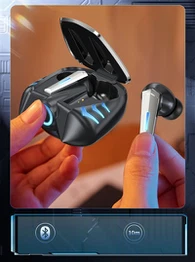


We are a professional manufacturer of high-end microphones and earphones, all products are independent research and development and production. Has its own mold design center, product development team, sales network all over the world. With the professional spirit of innovation and customer service, the company has developed from a small processing plant with more than 20 employees to a large manufacturing enterprise of large microphones and headphones audio products with more than 300 employees in just a few years.
Why Choose Us
Quality Assurance
Company to ensure product quality as the benchmark, customer service as the premise, cohesion and development of the team, improve service quality, pay attention to corporate reputation! Sincere service for new and old customers as always!
Advanced Production Technology
From the manufacturing of microphone raw materials into the factory to the finished products are all completed by the advanced one-stop production process, and through the strict quality testing of skilled technicians, to ensure that our products have beautiful appearance, superior performance, stable quality, and low price characteristics.
Company's Product
Wireless microphone, wired microphone, conference microphone (Gooseneck microphone), collar microphone, headphone, musical instrument microphone (drum set microphone), computer microphone, teaching microphone, broadcast recording microphone, interview microphone, live microphone, microphone accessories, headphone, in-ear headset, Bluetooth headset, TWS portable, etc.
Our Factory
We are a professional manufacturer of high-end microphones and earphones, all products are independent research and development and production. Has its own mold design center, product development team, sales network all over the world. With the professional spirit of innovation and customer service, the company has developed from a small processing plant with more than 20 employees to a large manufacturing enterprise of large microphones and headphones audio products with more than 300 employees in just a few years.

Toyota Car Navigation Microphone
This is a microphone used in car navigation to make phone calls, making the voice louder and clearer

It comes with a clip for easy installation, which can be clipped to the collar for use, or clipped to the visor for talking

Honda Car Navigation Microphone
Comes with double-sided tape to stick anywhere Use 3.5MM universal audio interface, plug in can be used

Our line uses a double-layer shielded line so that the audio signal does not interfere with the phone and the sound is clearer, which can achieve a downshower call. The line has long and short can be customized according to different needs

Our line uses a double-layer shielded line so that the audio signal does not interfere with the phone and the sound is clearer, which can achieve a downshower call. The line has long and short can be customized according to different needs

Audi Car Navigation Microphone
Our line uses a double-layer shielded line so that the audio signal does not interfere with the phone and the sound is clearer, which can achieve a downshower call. The line has long and short can be customized according to different needs

Comes with double-sided tape to stick anywhere Use 3.5MM universal audio interface, plug in can be used

Great Wall Motor Car Microphone
This is a microphone used in car navigation to make phone calls, making the voice louder and clearer

Comes with double-sided tape to stick anywhere Use 3.5MM universal audio interface, plug in can be used
A shotgun microphone is a type of microphone that is frequently used in film and TVproduction as well as vlogs and, sometimes. Shotgun mics are highly directional, which means that they can pick up sound from a specific direction while filtering out background noise.This makes them ideal for use in noisy environments, such as crowded streets or busy restaurants. Shotgun microphones are typically mounted on a boom pole or other support to allow them to be positioned close to the sound source. This is because a shotgun mice provides no mechanical amplification, only rejection. They rely solely on electronic amplification. It will be up to your amplifier, recorder, etcetera to amplify the signal captured by that microphone element.
Advantages of Shotgun Mic
One. Shotgun microphones tend to sound more "natural" when compared with lavaliers. Because of a combination of air, distance and electronics, sound recorded with a shotgun feels more like what you'd expect to hear as a spectator.
Two. Shotgun microphones don't need to be hidden on the actor. They're usually on some kind of microphone stand or boom pole and operated separately by a boom operator – and kept out of the shot. Because of their extended range and narrow polar pattern, the can sound wonderful many feet away and far out of the shot.
Three. Shotgun microphones require no batteries to operate and always work with the phantom power your recorder normally provides anyway. No loss of a take from batteries going dead – or having to fish around to find more batteries. Some shotgun mics also use batteries so when you're running around without phantom power, you can do so easily.
Four. Shotgun microphones don't suffer from RF hits – because they're cabled. Although cables are our enemy, a good cable is always going to sound better than a good wireless transmitter.
What is the Difference Between a Shotgun Mic and Other Mics
The term "shotgun" refers to the polar pattern of the microphone. Most shotgun microphones are hyper-cardioid patterns. This means the microphone is very directional, so you can point it at a specific subject and it will only pick up their voice.
Dynamic microphones and condenser microphones are two types of mics based on their capsule components and mechanisms. Generally speaking, dynamic microphones are less sensitive but more robust and best used on loud sources. Meanwhile, condenser microphones are more sensitive to small changes but can be overloaded if the source is too loud.
The quality of rejection is as important as the degree of rejection. Even a highly directional shotgun will admit off-axis sound at certain frequencies. When this audio is colored by comb-filtering artifacts, your end result will be affected. Most shotgun mics are reasonably good at capturing on-axis audio. Although, for the best overall audio, it's important to look for low-self noise and high sensitivity in conjunction with a natural on-axis sound and uniform off-axis rejection.
In general, most shotgun mics require 48V phantom power from a mixer while other on-camera versions and capsule mics use the camera's internal power, or have a removable battery. Shotgun mics are a great choice if you need to speak from a distance and don't want to hold a dynamic microphone or wear a lavalier microphone.

Shotgun vs. Lavalier
Both shotgun mics and lavaliers (lapel mics) can capture quality audio when used properly. They are perfect for interviews, vlogging, and dialogue. Since lavalier mics clip to the subject, even the omnidirectional variety can provide a good signal-to-noise ratio. A wired lavalier mic can be plugged directly into a 3.5mm jack and record directly to the video file. Wireless lavalier mics require a transmitter, which can also be plugged into 3.5mm or recorded to a separate mixer to sync up later in post-production.
Despite lavaliers being suitable for a ton of things, the form factor of a shotgun mic make them more versatile. When compared to lavaliers, shotgun microphones can sound more natural. Also, they can be kept out of your shots without needing to be hidden on actors, yourself, or interviewees.
How Do Shotgun Mics Work
Shotgun microphones have tight polar patterns and work on the "waveform interference" principle. However, there are compromises associated that must be intelligently addressed to ensure that the mic working smoothly. These mics are focused on two prominent technologies: Supercardioid polar pattern and Interference Tube.
Every shotgun mic has a directional capsule with a long hollow interference tube attached to its end surface. The capsule's further arrangement increases the reverberant ratio, but the mic can overcome this with ultra-directionality.
The interference tube is behind the unidirectionality and successfully removes surrounding noises with a focus on the direct source.
Desired, on-axis or direct source sound will pass uninterruptedly from the capsule to the diaphragm.
However, the interference results from different slots or entry points at the end of the mic tube.
These slots serve as a unique entry point for the off-axis that can enter the diaphragm from other places.
The surrounding noises will enter from different angles, and the distance will vary according to their entry points.
Each slot is at a different angle, so these off-axis sounds phase out and tend to cancel each other.
Consequently, on-axis sounds are enhanced, and off-axis are attenuated relative to the on-axis. It is why shotguns are called "interference tube" mics, and their polar pattern is narrower from the front surface.
Also, the cancellation of off-axis sounds depends on the length of the tube, angle of incidence, wavelength of sounds, and the slot spacing. Specifically, the wavelengths below 2 kHz will be unaffected regardless of their directionality.
Shotgun microphones have limitations when there are many interactions of off-axis sounds and become colored "changed." These limitations are often due to the following reasons:
The sound varied effect is prominent when the microphone moves during the recording.
Shotgun mics tend to work at higher frequencies and are ineffective during the mid or lower range of frequencies.
Due to the shotgun unidirectionality during the desktop recordings, providing on-axis sounds takes a lot of work.
So, shotgun mics work best when there is a significant difference between off-axis and on-axis sounds. However, in a closed environment, both off and on-axis become similar, which makes it challenging to analyze the difference.
The longer mics are more sensitive but cannot effectively remove surrounding noises. Also, short shotgun mics are less directional but more focused on eliminating off-axis sounds efficiently.
The mic's polar patterns result from the interference tube's ability to discriminate between on and off-axis sounds. The on-axis arrives simultaneously as "in-phase," while the off-axis has different paths and frequencies as "out of the phase."
The polar patterns are "frequency-dependent relationships," which means the higher the frequency, the tighter will be the directional pattern.
This higher sensitive polar pattern has a narrow pickup range and efficiently rejects off-axis sounds. Due to their sensitivity, the operator must be silent and focused on the source because of its rear pickup.
The Hypercardioid pattern has a directivity index (DI) of 6 dB, ensuring a smooth polar response at higher frequencies. So, the Hypercardioid has a narrow pickup pattern, and frequency directionality depends on the microphone's length.
That all depends! A shotgun mic is much longer than a typical microphone. This is why they are reassembled as shotgun. The practical range is the most important factor to consider when choosing a mic. A shotgun mic typically has a pickup range around four to ten feet.
Generally, a medium shotgun works well enough for booming and picking up voices. Although a short shotgun microphone is less directional than its longer siblings, it still provides better rejection of off-axis high frequencies than a hyper-cardioid microphone.
Longer tubes will reject more off-axis sound, but they are also more difficult to work with due to their length. Since moving the microphone even slightly off-axis will result in attenuation of the sound source, this microphone is quite sensitive to positioning and requires a fixed mic/source or a skilled boom operator. Often, this is the best option for loud environments.
Parts of a Shotgun Mic
Microphone Capsule
The microphone capsule is where the magic begins. It consists of a diaphragm and a backplate. When sound waves hit the diaphragm, it vibrates in response to the variations in air pressure caused by those waves.
The diaphragm's vibrations are extremely tiny, but they are crucial as they convert acoustic energy into electrical signals. This conversion process is the fundamental function of any microphone and is where the audio journey begins.
Interference Tube
The interference tube is a defining feature of shotgun microphones. It's a slender, slotted cylinder located in front of the microphone capsule. The tube's purpose is to create a highly directional pickup pattern. It does this through a process called phase cancellation. As sound waves enter the tube, they undergo phase interference.
This results in a highly focused pickup from the front, where the desired sound source is, while rejecting sound from other angles. The length and design of the interference tube are critical factors in determining the microphone's directional characteristics.
Circuitry and Electronics
Inside the microphone's body, you'll find an array of electronic components responsible for amplifying and processing the audio signal. These components include amplifiers, impedance converters, and sometimes filters.
The circuitry ensures that the electrical signal generated by the microphone capsule is robust, clean, and properly matched to the input of recording equipment or sound systems.
Output Connector
The output connector is where the microphone's electrical signal is made accessible for connection to recording devices or sound systems. Common connectors for shotgun microphones include XLR, mini-XLR, or USB, depending on the microphone's design and intended use. The choice of connector depends on the microphone's compatibility with specific recording equipment.
Body and Housing
The microphone's body and housing encase and protect the internal components. These exteriors are typically constructed from metal or high-quality plastic to ensure durability and resistance to wear and tear.
The design of the body is also engineered to minimize handling noise and other external factors that could interfere with the audio recording.
Grille or Windscreen
Positioned at the front of the microphone, the grille or windscreen serves both protective and functional purposes. It guards the delicate capsule and internal components against dust, debris, and physical damage.
In outdoor recording scenarios, the grille may also include a built-in windscreen or be accompanied by additional wind protection accessories. These elements are crucial for reducing wind noise during recording.
Shock Mount
Many shotgun microphones come with shock mounts or suspension systems. These are vital for isolating the microphone from vibrations and handling noise.
Shock mounts typically use elastic bands or rubberized suspensions to provide a cushioning effect, ensuring that vibrations from handling or external sources do not reach the microphone capsule and distort the recording.
Wind Protection
Shotgun microphones often include wind protection accessories, such as foam windscreens or furry windjammers. These are particularly important for outdoor recording, where even a gentle breeze can introduce unwanted wind noise into the recording.
Each component of a shotgun microphone plays a vital role in its ability to capture highly directional and precise audio. From the capsule's initial conversion of sound waves into electrical signals to the interference tube's phase cancellation, and from the circuitry's signal processing to the protection offered by the body and windscreen, every part contributes to the microphone's overall performance and utility in various recording scenarios.
Types of Shotgun Mic
Shotgun microphones, those versatile tools cherished by audio professionals and content creators, come in a trio of distinct types. Each type boasts unique attributes, allowing them to shine in specific recording scenarios.
Short Shotgun Microphones
Short shotgun microphones, often referred to as compact shotgun microphones, find their niche in the world of close-up shots. They embody a balanced design, offering a compromise between size and directionality. This balance makes them perfect for capturing sound sources situated relatively close to the microphone.
When you're working on interviews, documentaries, or scenes in controlled environments where precision matters, short shotgun microphones are the go-to choice. Their moderate pickup angle ensures that you capture your subjects' voices or sounds with remarkable clarity, enhancing the overall audio quality of your project.
Long Shotgun Microphones
Stepping up in length and directionality, long shotgun microphones specialize in long-range audio capture. These microphones are designed to excel when your sound source is more distant or when you require pristine audio quality without having to physically get closer to the subject.
Picture a sound engineer working on a film set, aiming to record dialogue between actors situated meters away. In such scenarios, long shotgun microphones become invaluable. Their extended reach allows you to capture audio from afar without compromising on the audio's richness and fidelity.
Super Shotgun Microphones
At the pinnacle of shotgun microphone technology lie the super shotgun microphones. These represent the epitome of directionality and sensitivity, and they are favored by professionals across the film, television, and broadcasting industries.
Super shotgun microphones are exceptionally versatile, capable of delivering exceptional results in both close-up and long-range shots. They're prized for their ability to isolate the target sound source with remarkable precision, effectively ignoring ambient noise and unwanted distractions using low-cut filters and gain controls.
Whether you're capturing an intimate dialogue scene or capturing wildlife sounds in the wilderness, super shotgun microphones are trusted companions for those who demand nothing but the best in audio quality.
FAQ
Hot Tags: shotgun mic, China shotgun mic manufacturers, suppliers, factory, Wired Microphone, bose quietcomfort 45, FM Multi function Microphone, Moving Coil Microphone, apple airpods max, Headphones with Charging Bay