


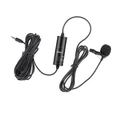


We are a professional manufacturer of high-end microphones and earphones, all products are independent research and development and production. Has its own mold design center, product development team, sales network all over the world. With the professional spirit of innovation and customer service, the company has developed from a small processing plant with more than 20 employees to a large manufacturing enterprise of large microphones and headphones audio products with more than 300 employees in just a few years.
Why Choose Us
Quality Assurance
Company to ensure product quality as the benchmark, customer service as the premise, cohesion and development of the team, improve service quality, pay attention to corporate reputation! Sincere service for new and old customers as always!
Advanced Production Technology
From the manufacturing of microphone raw materials into the factory to the finished products are all completed by the advanced one-stop production process, and through the strict quality testing of skilled technicians, to ensure that our products have beautiful appearance, superior performance, stable quality, and low price characteristics.
Company's Product
Wireless microphone, wired microphone, conference microphone (Gooseneck microphone), collar microphone, headphone, musical instrument microphone (drum set microphone), computer microphone, teaching microphone, broadcast recording microphone, interview microphone, live microphone, microphone accessories, headphone, in-ear headset, Bluetooth headset, TWS portable, etc.
Our Factory
We are a professional manufacturer of high-end microphones and earphones, all products are independent research and development and production. Has its own mold design center, product development team, sales network all over the world. With the professional spirit of innovation and customer service, the company has developed from a small processing plant with more than 20 employees to a large manufacturing enterprise of large microphones and headphones audio products with more than 300 employees in just a few years.

Toyota Car Navigation Microphone
This is a microphone used in car navigation to make phone calls, making the voice louder and clearer

It comes with a clip for easy installation, which can be clipped to the collar for use, or clipped to the visor for talking

Honda Car Navigation Microphone
Comes with double-sided tape to stick anywhere Use 3.5MM universal audio interface, plug in can be used

Our line uses a double-layer shielded line so that the audio signal does not interfere with the phone and the sound is clearer, which can achieve a downshower call. The line has long and short can be customized according to different needs

Our line uses a double-layer shielded line so that the audio signal does not interfere with the phone and the sound is clearer, which can achieve a downshower call. The line has long and short can be customized according to different needs

Audi Car Navigation Microphone
Our line uses a double-layer shielded line so that the audio signal does not interfere with the phone and the sound is clearer, which can achieve a downshower call. The line has long and short can be customized according to different needs

Comes with double-sided tape to stick anywhere Use 3.5MM universal audio interface, plug in can be used

Great Wall Motor Car Microphone
This is a microphone used in car navigation to make phone calls, making the voice louder and clearer

Comes with double-sided tape to stick anywhere Use 3.5MM universal audio interface, plug in can be used
Condenser microphones are recording tools that rely on a particularly sensitive vibrating diaphragm to capture sound. Condenser microphones are considered the most versatile recording studio microphones and can be used to record essentially any instrument. They are somewhat more fragile and sonically sensitive than dynamic mics, making them great for recording vocals and acoustic instruments. Condenser mics are typically held up by a shock mount that uses elastic bands to suspend the microphone in the air.
Advantages of Condenser Microphone
They Are More Sensitive, Making Them Ideal For Recording At A Distance
Another benefit of their design is that condenser microphones are more forgiving than dynamic alternatives when it comes to the proximity between the mic and your sound source. A condenser microphone will be able to pick up the sound more consistently and from further away than a dynamic mic, in turn resulting in a more balanced recording.
Better Impulse Fidelity And Accuracy
Condenser microphones are typically used for studio recording because of their incredibly detailed sound. They can pick up the finest nuances and provide a level of precision that a dynamic microphone cannot provide by design. In particular, small-diaphragm condenser microphones are better at capturing dynamic differences and transients.
Wider Frequency Response
Condenser microphones have a wider frequency response, which means they can pick up a very wide range of frequencies, from very low to very high. This results in a more precise and detailed sound reproduction. The high frequencies, in particular, produce the coveted "high-fidelity" or "high-end" sound.
Little Gain Required
The diaphragm of a condenser microphone is more sensitive than that of a moving-coil microphone, so condenser microphones require much less preamplification. An additional preamplifier, as with dynamic microphones such as the Shure SM7B, is not required - the preamplifier built into theaudio interfaceor mixing console is sufficient.
Uses of Condenser Microphones
Condenser microphones, also known as capacitor microphones, are a type of microphone that utilizes an electronic component called a capacitor to capture sound waves and convert them into electrical signals. These microphones are widely used in various applications due to their sensitivity, accuracy, and ability to capture a wide frequency range. Here are some common applications of condenser microphones:

Studio Recording: Condenser microphones are a staple in professional studio recording environments. They can capture subtle nuances in vocals and instruments, making them ideal for capturing high-quality audio for music production, voiceovers, podcasts, and more.
Live Sound Reinforcement: Condenser microphones can also be used for live sound applications, particularly in controlled environments like theaters and concert halls. They are often used for capturing the sound of choirs, acoustic instruments, and overhead drum microphones.
Broadcasting: Condenser microphones are commonly used in radio and television broadcasting studios. They provide clear and detailed sound reproduction, making them suitable for broadcasting voices and capturing various sounds for different types of programming.
Podcasting and Voiceovers: Due to their ability to capture a wide frequency range and produce a clear and detailed sound, condenser microphones are popular choices for podcasting and voiceover work. They help achieve professional-sounding audio recordings.
Instrument Recording: Condenser microphones are used to record a variety of musical instruments, including pianos, acoustic guitars, violins, and other orchestral instruments. Their sensitivity allows them to capture the intricate nuances and timbral qualities of these instruments.
Field Recording: In the context of recording outdoor soundscapes, nature sounds, or documentary audio, condenser microphones can provide accurate and detailed recordings of ambient environments.
Sound Effects Capture: Sound designers and Foley artists use condenser microphones to capture specific sound effects for use in films, video games, and other multimedia projects. The microphones' sensitivity is crucial for capturing intricate sounds accurately.
Scientific and Industrial Applications: Condenser microphones are used in scientific research, such as acoustic measurements and studying sound propagation. They are also used in industrial applications for quality control and testing purposes.
Measurement and Testing: Condenser microphones are commonly used in various measurement and testing scenarios, including environmental noise monitoring, acoustic analysis, and vibration measurements.
Conference and Communication Systems: Condenser microphones are often used in conference rooms, lecture halls, and video conferencing setups to ensure clear and intelligible communication.
Different Types of Condenser Microphones
Large-diaphragm Condenser Microphone
Large-diaphragm condenser mics such as the RØDE NT1-A utilise a larger membrane in their capsule, as you may have guessed. While there isn't necessarily an industry standard for what capsule size qualifies for this category, a condenser microphone with a diaphragm of 1 inch (25.4mm) or greater is considered a large diaphragm as a rule of thumb.
One of the biggest technical advantages of this design is that its larger diaphragm can generate a higher signal voltage, which in turn results in the microphone producing less of its own noise (self-noise).
Large-diaphragm condensers typically have a less consistent pickup pattern than small-diaphragm counterparts. While this may not be ideal if you're aiming for a perfectly uncoloured recording, it is what accounts for the 'lush' and 'warm' character often attributed to these microphones and is what makes them ideal for recording vocals, and in a range of other applications.
Small-diaphragm Condenser Microphone
Small-diaphragm condenser mics like the RØDE NT5 typically produce a flatter and less 'coloured' signal than their large-diaphragm counterparts, meaning they give you a very accurate audio image. They typically have an extended low- and high-frequency response, and a consistent pickup pattern that helps capture sounds as 'naturally' (or 'neutrally') as possible. This may or may not be ideal for you, depending on the recording application – for example, small-diaphragm condensers aren't typically used to record vocals, but like many recording scenarios, it comes down to a matter of taste.
Just like their large-diaphragm brethren, there is no hard-and-fast rule for what qualifies as 'small', but it's generally accepted that it refers to anything with a diameter of half an inch (12.7mm) or less. This smaller membrane also results in a superior transient response ideal for recording sound sources with a fast attack, like piano, drums and stringed instruments.
While almost all large-diaphragm microphones are side-address (meaning, you aim the sound source perpendicular to the microphone body), small-diaphragm mics can be either side- or end-address.
Tube Condenser Microphones
Tube condenser mics like the RØDE NTK utilise a vacuum tube (also known as a valve) in their preamplifier circuit rather than transistors. This style of microphone was the first to be developed amongst the condensers, but when transistor (also known as 'solid state') technology became widely available it largely replaced tubes due to the latter's 'imperfections'. These imperfections have since become revered for the character they impart, and tube mics have seen a resurgence over the past few decades.
Among the qualities of a tube microphone is that they tend to add pleasant harmonics to a sound source, as well as subtle saturation and compression. While this character can be desirable, tube mics also tend to come with a higher self-noise level and require a separate power supply to operate – 48V phantom power from your audio interface won't cut it.
How to Choose the Condenser Microphone
Your Budget
Before you start browsing mic options, you'll need to settle on how much you're willing to spend on your microphone. Don't worry, even if you've got a strict budget, you'll be able to find a mic that works well for your needs.
Microphone Applications
Next, you'll need to think about your needs, wants, and how you will be using this microphone. What kinds of sounds will you be recording? And in what kinds of environments? If you're solely a podcaster, your primary focus will be vocals. However, if you're also an instrumentalist, for example, you may want to look into whether your chosen mic works well with your instrument of choice.
Connectivity
If you're looking for a plug-and-play mic, you're most likely looking for a USB condenser mic. If you're a stickler for quality and have the money to spend on an audio interface and xlr cable, however, then you'll be able to look at XLR condenser mic options too.
Size Of The Diaphragm
As we saw earlier, the size of your mics diaphragm can impact its performance at higher frequencies and how accurate the audio it produces is.
The Polar Patterns
Another huge consideration is your mic's polar pattern. You'll have to choose between cardioid, super-cardioid, bi-directional, and omnidirectional. All of these are more or less suitable, depending on what you're recording and where.
Cardioid
A cardioid pickup pattern is named for its heart shape. A cardioid mic will predominantly pick up sound from in front of the mic. A hyper-cardioid mic is essentially a more extreme version of this. Hyper-cardioid mics do the same, blocking out any other external noise more effectively.
Bi-directional
Bi-directional mics pick up sound from two directions: the front and back of the mic.
Omnidirectional
Omnidirectional mics pick up sound from 360 degrees.
The Frequency Response
The frequency response indicates what range of frequencies your mic can pick up on. It also tells you how your mic performs at any given frequency. For example, one mic might perform better for highs versus lows or vice-versa. A typical frequency response range goes between 20 and 20,000 Hz, although it varies depending on the mic and maker.
Large Condenser Microphone Vs Small-Diaphragm Condenser Microphones: What's the Difference
A microphone's diaphragm is a thin membrane that can conduct electricity. It sits next to a metal plate within the microphone housing. The sound of a large-diaphragm microphone will differ from that of a small-diaphragm mic-generally, the larger the diaphragm, the more detailed the sound and heftier the microphone.
Large-diaphragm mics, particularly large-diaphragm condensers, are some of the most detailed microphones on the market. They're a standby for recording vocals, but you'll also see large-diaphragm mics in front of guitar amps, acoustic instruments, and even drum kits. They can come in somewhat unwieldy shapes, and a large-diaphragm condenser requires external phantom power - which means you have to include a power source like a laptop computer, connected via a digital audio interface - but the sound of a good large-diaphragm mic is second to none.
True to their name, small-diaphragm microphones are smaller than large-diaphragm mics, and this makes them more portable. In most applications, recording engineers use small-diaphragm mics to record instruments. Because of their compact size, small-diaphragm mics can clip to a drum set and record individual pieces of the kit. They can also work for recording vocals, but for that, most engineers opt for large-diaphragm mics instead.
How To Properly Store Condenser Microphone When Not In Use
Clean and Protect
Before storing your condenser microphone, it's important to clean it properly.
We suggest using Isopropyl and a microfiber cloth. Apply the Isopropyl onto the cloth before using it and do not spray it directly onto the microphone grill or ports. Handle it gently and avoid using too much pressure to avoid causing any damage.
Consider using a pop filter or foam windscreen to protect the microphone's diaphragm from dust, moisture, and accidental bumps. These accessories can help maintain the microphone's sensitivity and prevent any potential damage.
Store in a Suitable Case or Storage Bag
A dedicated microphone case or a padded storage bag is an ideal option for keeping your condenser microphone safe. Look for a case that provides a snug fit and has enough padding to protect the microphone from any impact or shock. Some cases even have compartments to store additional accessories such as cables and shock mounts.
If you don't have a dedicated case, you can also use a clean and dry container, such as a plastic storage box or a drawer, to store your condenser microphone. Just make sure to add some padding, such as foam or cloth, to protect the microphone from any potential damage.
Avoid Extreme Temperatures and Humidity
Condenser microphones are sensitive to extreme temperatures and humidity levels. It's crucial to store your microphone in a cool and dry environment to prevent any damage. Avoid storing it in places that are exposed to direct sunlight, extreme heat, or excessive moisture.
Our microphones are tested at an industry standard of +60°C @ 85% Rh to -20°C @ 0% RH (RH - relative humidity)
If you live in a country or region with high humidity, consider using moisture-absorbing packets or silica gel packs in the storage case or container.
FAQ
Hot Tags: condenser microphone, China condenser microphone manufacturers, suppliers, factory, Mini Microphone Stand, airpod max headphones, noise two wireless headphones, sony wh 1000xm5, shop headphones, p9 headphones


