



- Tel: +86-755-28169429
- Mob2: +8618124114055
- Email: 779480230@qq.com
 Wechat: 18124114055
whats:+8618926474066
Facebook:Sensaura4066@gmail.com
 QQ: 779480230
- Add: 3rd Floor, Building C, Dongxinjia Industrial Park, No.15 Zhengxiang Road, Guangming New District, Shenzhen.
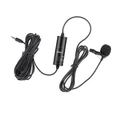
Wired Microphone
Our goal is to become your true partner in the field of collar mic wireless in China. We are a professional manufacturer of high-end microphones and earphones, all products are independent research and development and production. Our company is committed to applying advanced manufacturing technology and strict quality control standards to every product. The price is competitive and the product is quality-assured, which is a good choice for your long-term cooperation.


Why Choose Us
Our Equipment
The company has strong technical force and advanced equipment, including HP signal generator, spectrum analyzer, modulator, electroacoustic tester, etc.
Our R&D
Our company started with audio units, and has brought together a large number of high-end talents in the audio industry and appearance design, and has strong R&D capabilities.
Quality Control
From raw materials entering the factory to finished products leaving the factory, all products adopt advanced one-stop production processes, and are strictly tested by skilled technicians to ensure that the products have beautiful appearance, superior performance and stable quality.
Our Service
The company has a professional sales team to provide you with high-quality pre-sales consulting services. During the order production process, customers can communicate with us at any time to understand the production progress. At the same time, we provide high-quality after-sales service to meet the different needs of customers.
Advantages of Wired Microphone
Better Sound Quality: With wired microphone, what you put into it is what you get out of it. A high quality mic capsule well matched to voice or instrument is the best possible way to get quality sound. With wireless microphone, you are often limited in the selection of mic capsules, limiting your ability to try different microphones to find the best match.
Easy Operation: Wired microphone is easy to use, just plug and play. Also, wired microphone has faster setup time at sound checks whereas wireless systems require some time to make sure all the receivers are set to a different channel, and to make sure there is no interference from local TV and radio stations, or other wireless systems in the venue.
Reliability: Wireless microphone has a higher rate of failure than wired microphone. In the world of production, where so much can go wrong, wireless introduces one more finicky area of possible failure. Wireless interference, intermodulation distortion and drop-outs happen for a variety of reasons and can kill a moment when you least expect it.
No Battery Required: Wired microphone will never run low on battery, so there is no need to worry that your performance will be brought to an abrupt end.
Cost Less: Wired microphone simply cost less. Average wired microphones often amount to 1/3 the cost of the wireless microphone if you compare apples to apples.
Specifications of Wired Microphone
|
Width |
42 mm |
|
Height |
168 mm |
|
Depth |
42 mm |
|
Weight |
189 g |
|
Cable length |
5.00 m |
|
Colour |
Black |
|
Material |
ABS |
|
On/Off switch |
Yes |
|
Travel case included |
Yes |
|
Frequency response |
80 Hz - 12 kHz |
|
Sensitivity |
-75 dB |
|
Impedance |
600 Ohm |
|
Microphone type |
Wired |
|
Number of microphones included |
1 Microphone |
|
Polar pattern |
Cardioid |
|
Detachable microphone cable connectors |
XLR 3-polig male - 6,35 mm male |
|
Microphone cable type |
Detachable Cable |
|
Microphone connection |
XLR 3-pin |
|
Number of Products in Package |
1 Pcs |
|
SmartLife |
No |
Types of Wired Microphones
Dynamic Microphones: Dynamic microphones are known for their durability and versatility, making them popular for live performances, broadcasting, and recording loud sound sources. They use a magnetic field, where a diaphragm attached to a coil moves when hit by sound waves. This movement generates an electric signal that reflects the sound.
Condenser Microphones: Condenser microphones are designed for high sensitivity, making them excellent for capturing detailed audio in controlled environments, such as studios. They use a diaphragm placed near a backplate to create a capacitor. When sound waves cause the diaphragm to vibrate, the distance between the two plates changes, generating a variable electric current.
Ribbon Microphones: Ribbon microphones are a unique type of wired microphone that uses a thin ribbon of metal suspended within a magnetic field. Sound waves cause the ribbon to vibrate, generating an electric current.
Lavalier (Lapel) Microphones: Although lavalier microphones are often wireless, wired lavaliers are commonly used in broadcasting, theater, and presentations. These small microphones are designed to clip onto clothing, making them ideal for hands-free usage.
Boundary (PZM) Microphones: Boundary microphones, also known as Pressure Zone Microphones (PZM), are specialized wired microphones used in conference settings, theaters, and large meeting rooms.

Wired Microphone Raw Materials
Depending upon the type of microphone, raw materials may vary. Permanent magnets are generally made from a neodymium iron boron compound. The voice coil and cable are made from copper wire. Plastic is used for cable insulation. The case is usually made from aluminum sheet and sometimes plastic.
Production Process of Wired Microphone
The die is an inverted replica of the desired case shape. The hydraulic punch is release and forces the aluminum into the die. Any excess material is trimmed and discarded. If the case is to be made of plastic, the plastic pellets are fed into a hopper and melted. The liquid is poured into an injection molding machine. The machine feeds the liquid into a closed mold. Once the mold is filled and the plastic has cooled, the mold is opened and the plastic case is taken out. If a switch is required, it is mounted in position in the case and secured with small screws and nuts or rivets.
The pre-cut plastic diaphragm is placed in a holding fixture. The voice coil bobbin is then glued in the exact center of the bobbin. After the glue has cured (about 24 hours), the assembly is lowered into the permanent magnet assembly and glued together. A coaxial audio signal cable is selected and cut to length. Insulation is stripped from all leads at both ends of the cable. Then, an audio connector is soldered to one end of the cable. The open end to the cable is left free.
The open end of the audio cable is inserted through its hole in the bottom of the case. The cable is pulled out through the top of the case a sufficient length to allow the wires to be soldered to the switch and voice coil. A foam rubber spacer is placed around the voice coil assembly and the assembly is lowered into the case. It is secured into proper place with a grille and cap.

Broadcasting
Reporters and news anchors often use customized cardioid microphones in broadcasting studios, newsrooms, or field reporting to capture voice for television, radio, or online news programs.
Podcasting
Podcasters may use personalized dynamic or condenser microphones to record high-quality audio for their shows. The microphones can be desktop models, handheld, or tied with a recording device.
Voiceover And Audiobooks
Customized microphones are widely used by voice actors, narrators, and producers in recording studios to create voiceovers for television commercials, film, or video games, and also to produce audiobooks.
Live Sound Reinforcement
Events like concerts, conferences, or live performances utilize sound systems that integrate customized microphones to amplify the voice of speakers, singers, or musicians.
Web conferencing and online meetings
Customized microphones are commonly integrated into headsets, laptops, or webcams to enhance audio quality for business meetings, webinars, or virtual collaboration.
Educational settings
Teachers and lecturers often use personalized lavalier or handheld microphones during large classes or presentations to ensure their voice is amplified and clearly heard by all students.
Broadcasting studios
Express news, radio stations, and other media organizations have broadcasting studios equipped with customized microphones for recording and transmitting news reports, interviews, talk shows, and other programs.
Packaging and Shipping of Wired Microphone
|
Packing |
Wooden case |
|
Shipping |
Shipped by road, sea, rail or air |
FAQ
We're well-known as one of the leading wired microphone manufacturers and suppliers in China. Please feel free to wholesale bulk high quality wired microphone made in China here from our factory. Contact us for customized service.
Wired Microphone, Microphone for Singing, Shotgun Mic